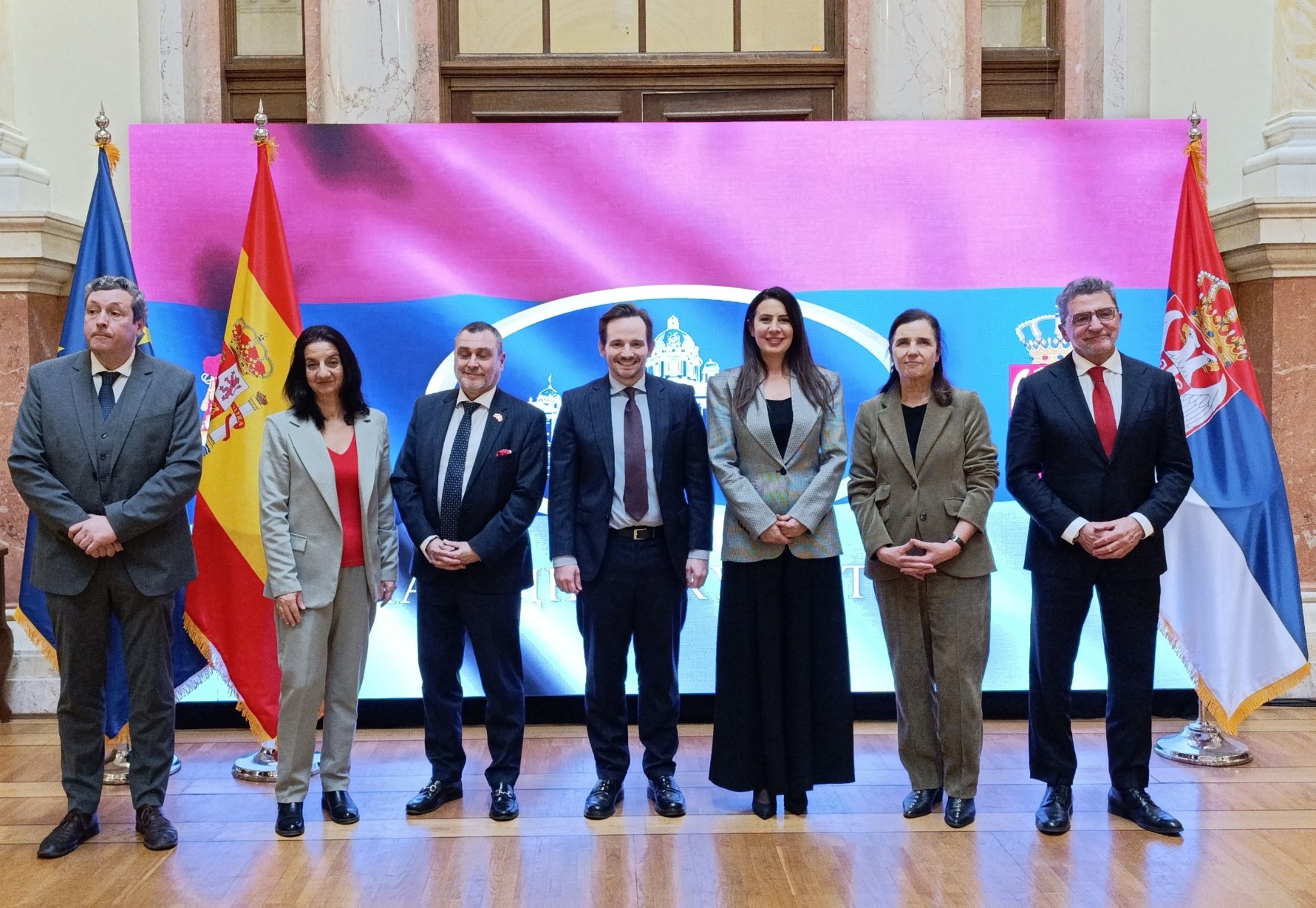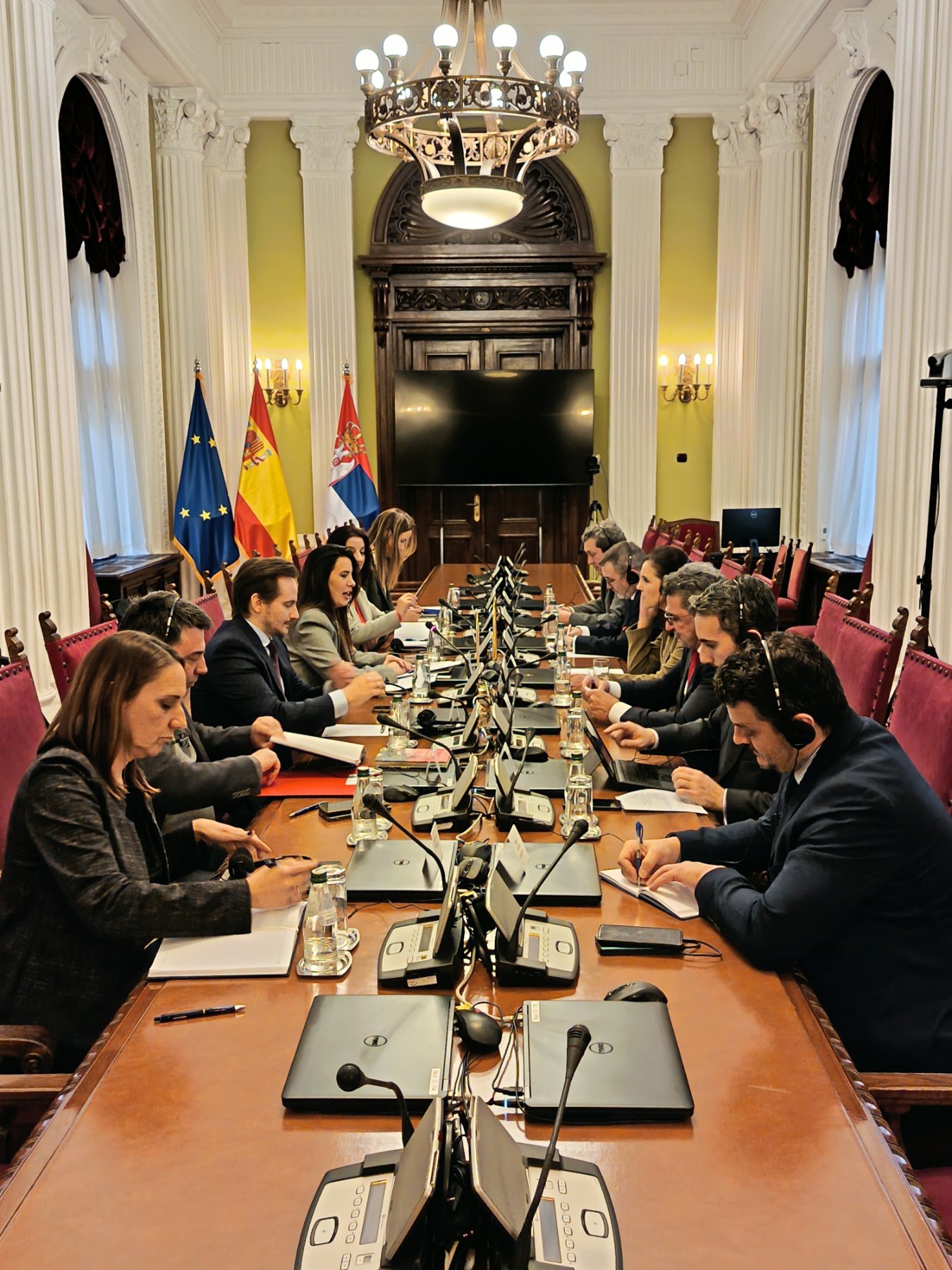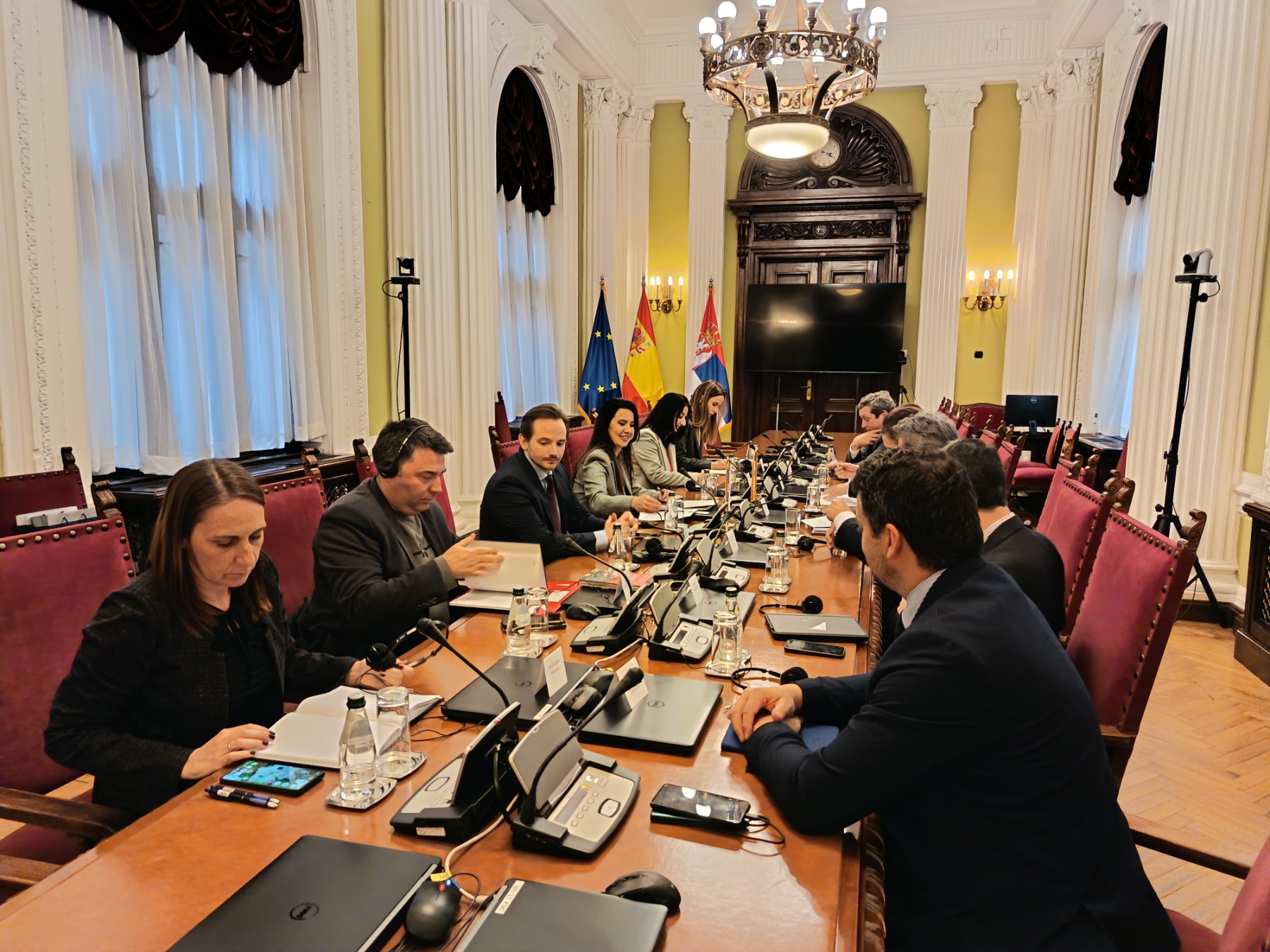

The Chairperson of the Committee on Kosovo-Metohija Danijela Nikolic and Committee members Stefan Krkobabic and Verica Milanovic met, at the National Assembly of the Republic of Serbia, with a delegation of the Foreign Affairs Committee of the Senate of the Kingdom of Spain, headed by Committee Chairperson Pilar Rojo.
The delegation of the Foreign Affairs Committee of the Senate of the Kingdom of Spain included Antonio Gutiérrez Limones, Íñigo Fernández, Ignacio Navarro, as well as HE Juan José Sanz Aparicio, Ambassador of the Kingdom of Spain to the Republic of Serbia.
The MPs informed the members of the Spanish parliamentary delegation in detail about the current situation in Kosovo-Metohija and the extremely difficult position of the Serbian population, as well as the causes that led to this situation.
The Chairperson of the Committee on Kosovo-Metohija, Danijela Nikolic, thanked the Kingdom of Spain for its principled stance and non-recognition of the self-proclaimed independence of so-called Kosovo, assessing that current political developments in the world clearly show how correct such a decision was. She emphasised that consistent respect for international law and the United Nations Charter is of key importance for the Republic of Serbia.
Nikolic stressed that the situation for Serbs in Kosovo-Metohija has been difficult for decades, but especially in the last four years, since Albin Kurti came to power. She pointed out that incidents occur daily and that in the last two years, around 700 ethnically motivated attacks on citizens of Serbia and the Serbian Orthodox Church have been recorded, adding that Serbs in Kosovo-Metohija are currently living in ghetto conditions.
The Committee Chairperson stressed that the process of ethnic cleansing of the Serbian population is underway through the systematic abolition of freedom of movement, the ban on the use of the Serbian language and script, as well as the erasure of everything related to the Serbian national and cultural identity. She expressed particular concern about the implementation of the so-called Law on Foreigners, according to which a minimum of around 20,000 Serbs in Kosovo-Metohija, who do not have documents from the so-called state of Kosovo, are treated as foreigners, even though they have been living in those areas for centuries. She presented all the brutality of the application of this Law towards a people who have been living in their homeland for centuries.
Danijela Nikolic also stressed that Spain’s continued support in the international community is of utmost importance in order to fully implement the 2013 Brussels Agreement, which guarantees the formation of the Community of Serb Municipalities. She assessed that there is no political will to implement this obligation either in Pristina or in Brussels.
The Committee Chairperson expressed special gratitude to Antonio Gutiérrez Limones, who is also the Head of the Delegation of the Kingdom of Spain to the Parliamentary Assembly of the Council of Europe, for his personal engagement and efforts invested in cooperation with the Delegation of the Republic of Serbia to the PACE. On the occasion, she emphasised the importance of Spain's principled position that the so-called Kosovo should not be admitted into the Council of Europe, thus protecting international law and the basic principles of the organisation.
The Chairperson of the Foreign Affairs Committee of the Senate of the Kingdom of Spain, Pilar Rojo, stressed that Spain will continue to support the territorial integrity and sovereignty of the Republic of Serbia, as well as all initiatives that lead to a peaceful and sustainable solution, with full respect for the internationally recognised borders of states.
Expressing support for Serbia's European integration, she assessed that membership in the European Union would represent a long-term solution for stability and overcoming problems in the Western Balkans region.
The members of the Committee on Kosovo-Metohija, Stefan Krkobabic and Verica Milanovic, expressed their gratitude for the continued support of the Kingdom of Spain to the Republic of Serbia in international organisations and institutions, especially in the Parliamentary Assembly of the Council of Europe, drawing attention to Pristina’s decisions that seriously threaten the rule of law in Kosovo-Metohija and deny the basic existential rights of the Serbian population.